Everyone I follow is complaining about reach right now. Posts that would have done 10K a year ago are doing 800, and the explanation going around is that the feed has gone topic-based. LinkedIn decides what you're about, shows you to people who want that, and who follows you matters less than it did.
I had my own version of that hunch. My posts seemed to be leaving my network faster than they used to, which is a problem for me specifically, because I write like you already know me. That works on people who do. It doesn't work on strangers.
The way I understood it to work before was that your network saw a post first, and if they liked it, it went wider. Now something else seems to be happening.
I'd also been poking at milestone posts. My theory on why they do so well: LinkedIn pushes them HARD to your network, your network gets excited, and then they get pushed out on the back of that.
So I tested it. One pair of posts, one Monday, numbers pulled every hour.
The test
Two posts, same argument: it's fine to use AI for your marketing copy when you don't have a copywriter, as long as you give it your brand voice, your strategy, and a messaging framework.
The normal post went up at 8:45 AM and opened with "I know a lot of people aren't going to like this, but I think it's okay to use AI for your marketing copywriting."
The milestone post went up at 10:45 AM through LinkedIn's celebrate-an-occasion flow and opened with "I'm here to announce that I created a skill that will write my marketing copy." I made it a milestone by announcing I'd built a skill, which, let's be real, is a bit of a stretch. But I've gotten huge reach just announcing a follower count, so I wanted to see what the format does.
They weren't identical. The milestone post had the card image, the body was reworded, and it went up while the first one was still circulating. Any of that could have changed how far LinkedIn pushed it. Keep that in mind.
Then I had Claude pull each post's analytics every hour for two days: impressions, the in-network vs out-of-network split, reactions, comments, followers gained.
What happened
At hour 1 they looked like the same post. 191 impressions for the normal post, 342 for the milestone post, both mostly in-network, both at about a 5% engagement rate.
Then they split.
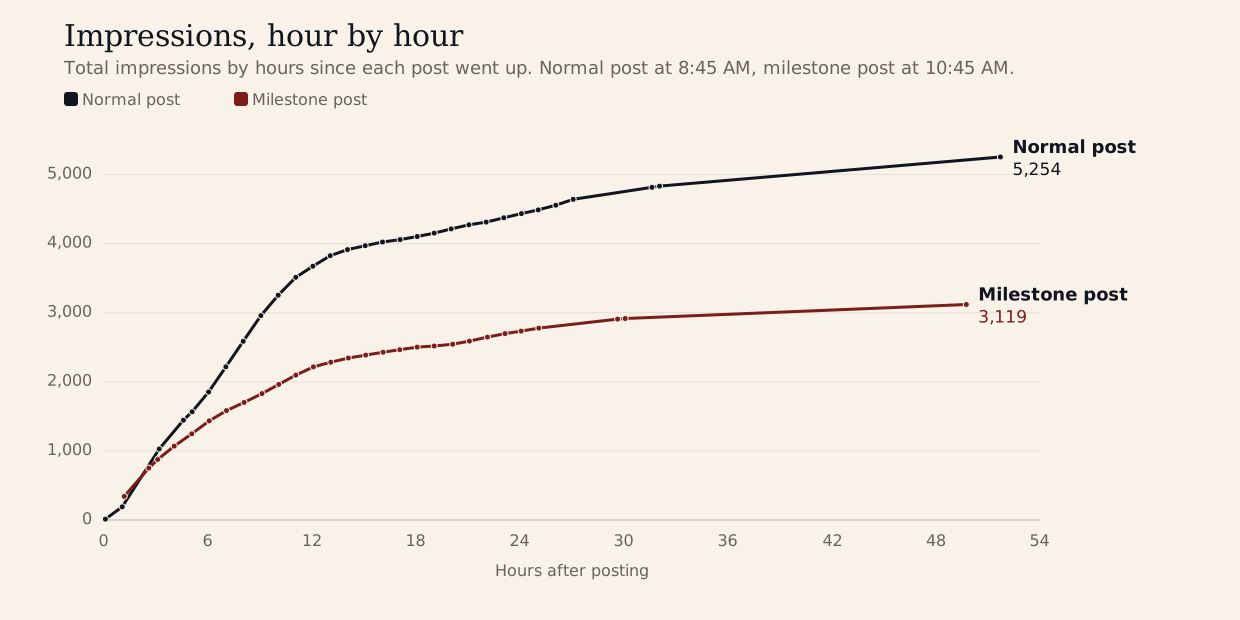
Between hours 1 and 3, the normal post got pushed out. It went from 69% in-network to 35%, and by hour 10 it was 20% and stayed there. By the end, about 4,200 of its 5,254 impressions had come from people who don't follow me.
The milestone post never got that push. It stayed above 70% in-network through hour 6 and finished at 59%.
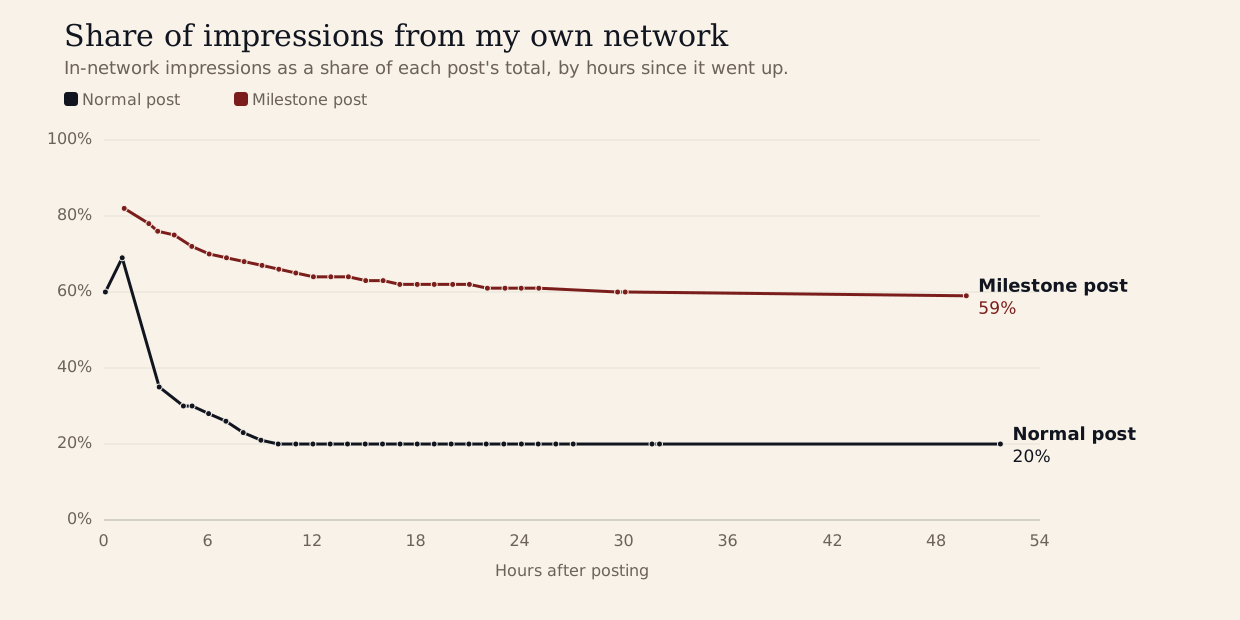
So the normal post won on reach, 5,254 impressions to 3,119. But the milestone post reached more of my actual network, roughly 1,840 in-network impressions to 1,050, on 40% fewer total impressions.
(I missed a few hours, and the overnight reads on day two. The lines run through the reads I have.)
The engagement went two different directions too.
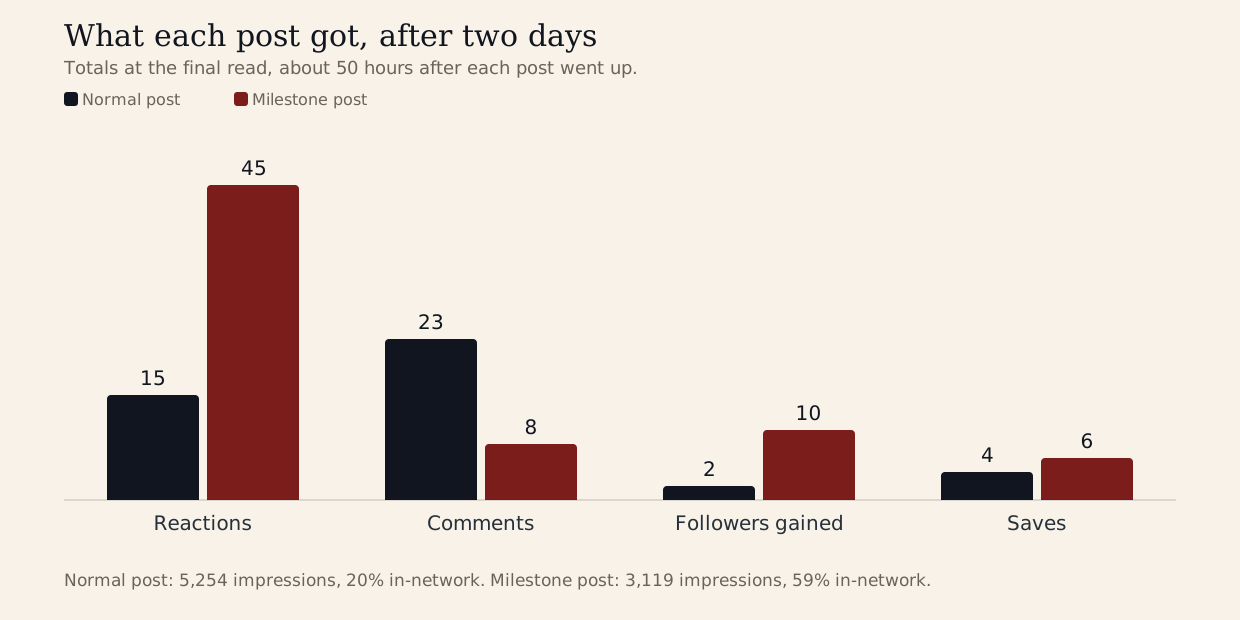
The milestone post got 45 reactions and 10 new followers, and held a 2% engagement rate the whole way. The normal post got 15 reactions and 2 new followers, and its engagement rate fell from 5% to 0.8% as the strangers arrived. It did get the comments, 23 to 8, and they kept coming on day two. But about 4,200 people who don't follow me saw the normal post. Two of them followed.
What I believed going in
Three beliefs, checked against what actually happened.
Posts leave your network fast now. The normal post did. 69% in-network at hour 1, 35% at hour 3. I can't prove that's faster than it used to be, because I never tracked old posts by the hour. But the shape matches what I'd been feeling.
It goes to your network first, then wider if they like it. If that's still the rule, early engagement isn't what decides it. Both posts were at about 5% engagement at hour 1. One went wide, one didn't.
Milestone posts get pushed hard to your network, then pushed out. Half true here. The milestone post did get pushed to my network harder and faster, 342 impressions and 14 reactions in the first 70 minutes. My network showed up. It just wasn't enough to make it go wide, and I don't know what enough looks like. Maybe nobody was saying congratulations on it. Maybe it got held back for being too close to a post I'd put up two hours earlier. Maybe building a skill isn't a milestone LinkedIn cares about. I dunno.
What I did expect was that the milestone post would do better overall, and it didn't. My guess on why is the topic. "AI instead of a copywriter" is a little rage-baity to someone who doesn't know me. What I actually believe is that AI should help us do more, better, faster, and that it's nowhere near replacing us. A stranger reading "I built a skill that writes my marketing copy" doesn't know that. Then again, that only explains the normal post's numbers (4,200 strangers, barely a reaction). The milestone post never got in front of strangers for the topic to matter.
What this proves
Nothing on its own. One pair of posts, one Monday. It's directional evidence for something I already believed, which is exactly when you should trust a result the least. If I run it again it's two days, same time slot, and a normal post with the announce-y opener, so I can tell the words apart from the format.
What I'm doing about it
Whatever your goal is on here, what I keep coming back to is that growth happens outside your network now, and it doesn't wait for your network to vouch for you first. That's a different game than the one I learned.
Stay on your topics. Not a change, I'm doubling down. If the feed is sorting people by what they post about, scattering makes you nobody's. Mine: marketing and AI, LinkedIn and personal branding, the future of work, job search (less lately), and the working-mom stuff.
Know who you're talking to before you write a word. Every time. I default to writing to people who already know me, and the numbers above are what that costs when a post leaves the house.
Sometimes write to the people who don't know you yet. Not always. When it makes sense. If the post is going out anyway, the first few lines have to work for someone who's never seen your name. The people who know you will still get it. The reverse isn't true.
This is the exact thing I built PostDx for, by the way. You paste the post, tell it what you want it to do, and it tells you whether it's ready and quotes the lines getting in the way. It doesn't write anything for you.
If you've watched a milestone post go wide, or you've been tracking your own posts by the hour, I want to hear about it. I'm clearly collecting these.